
How to Develop a Real Estate App: Complete Step-by-Step Guide
A comprehensive guide on building modern real estate platforms — covering market trends, core features, tech stack selection, and deployment strategies.
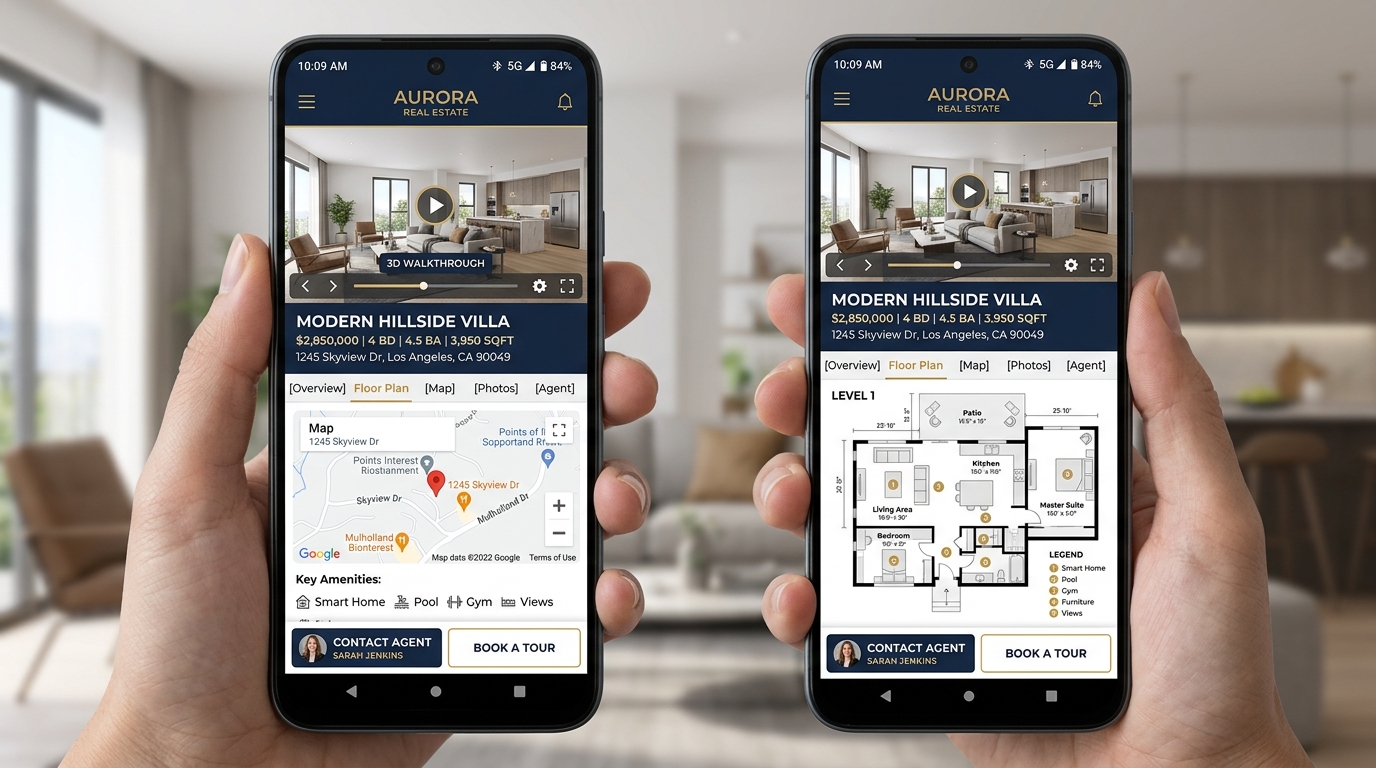
The real estate industry is undergoing a massive digital evolution. Buyers, renters, and property managers now expect real-time listing updates, interactive 3D virtual tours, and instant messaging right from their mobile devices.
Building a successful real estate application requires more than clean UI designs. It demands a robust cloud backend, scalable API integrations with MLS databases, and strict security compliance for transaction processing.
key takeaways
- Prioritize MLS & RETS database integration for automated, real-time property listings.
- Implement interactive maps with geolocation search and spatial filters.
- Incorporate AR/VR virtual tours to boost user engagement and remote property viewing.
- Design robust cloud infrastructure capable of handling high-resolution imagery and video streams.
1. Real estate app market overview
Digital property searches account for over 90% of home buying journeys today. Modern users expect seamless mobile experiences with instant filtering by price, location, property type, and amenities.
To stand out in today's competitive prop-tech market, apps must deliver hyper-personalized property recommendations driven by user behavior analytics.
- Over 75% of buyers find their homes using mobile devices.
- Interactive virtual walkthroughs increase user session times by up to 300%.
- Automated push notifications for price drops boost buyer conversion rates.
2. Must-have features for a modern property app
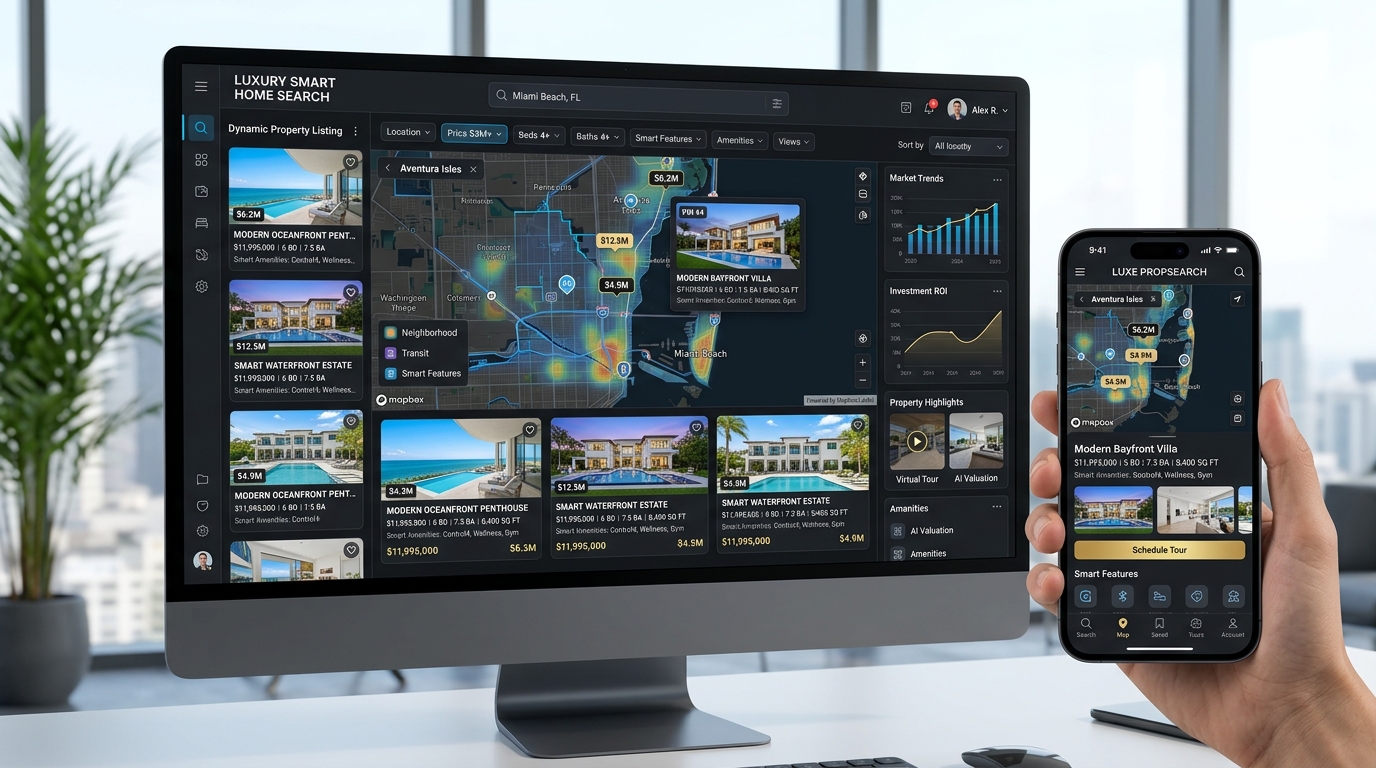
Every successful real estate app relies on a core set of features designed to simplify discovery, inquiry, and management for buyers, agents, and sellers alike.
- Advanced Search & Filters: Location radius, price brackets, square footage, and property type.
- Interactive Maps: Geolocation integration with custom map overlays for schools, crime rates, and transit.
- Virtual Tours: 3D walkthroughs and high-definition video galleries.
- In-App Messaging: Instant chat between buyers, sellers, and licensed agents.
- Mortgage Calculator: Built-in financial calculators for estimating monthly payments.
3. Choosing the right tech stack & architecture
A real estate platform's longevity depends heavily on selecting scalable, enterprise-grade technologies that allow fast data queries and seamless API integrations.
- Frontend: React Native or Flutter for cross-platform iOS and Android performance.
- Backend: Node.js or Python FastAPI for rapid API response times and asynchronous task processing.
- Database: PostgreSQL with PostGIS extension for high-performance spatial queries.
- Cloud Storage: AWS S3 or Cloudinary for fast CDN delivery of property photography.
4. Step-by-step development process
From initial scoping to cloud deployment, building a prop-tech platform requires a disciplined engineering workflow.
- Step 1: Product Scope & UX Wireframing — Mapping key user journeys for buyers and agents.
- Step 2: API & MLS Integration — Connecting to RETS / RESO Web APIs for live MLS data feeds.
- Step 3: Mobile & Web Frontend Engineering — Building responsive UI components and interactive map layers.
- Step 4: Quality Assurance & Security Audits — Testing spatial search performance and encryption.
- Step 5: Cloud Deployment & Monitoring — Launching on AWS or GCP with automated auto-scaling.
5. Cost & timeline considerations
Building an MVP real estate mobile app typically takes 3 to 5 months depending on feature complexity and API integrations.
Investing in clean architecture early prevents costly rewrites as your listing catalog expands.
- MVP Development: 12-16 weeks focusing on search, map integration, and user profiles.
- Enterprise Platform: 20+ weeks including AR tours, AI price estimation, and payment processing.
Frequently Asked Questions
How do real estate apps sync property listings in real-time?
How long does it take to develop a custom real estate app?
Can we integrate 3D virtual tours into mobile apps?
Related Blog


Ready to build without the runaround?
Start with a practical conversation. We will help you understand the right next step before you spend money building the wrong thing.
Start a Project