
Mobile App Development Trends in 2026: Architecture, Cross-Platform & AI Integration
An engineering guide to modern mobile application development — exploring React Native vs Flutter, on-device AI models, offline-first data sync, and enterprise security.

Mobile application development in 2026 demands far more than basic screen rendering. Enterprise organizations require multi-platform applications that deliver native performance, instant offline responsiveness, and embedded machine learning capabilities.
Engineers must architect mobile systems that bridge modern cross-platform frameworks with cloud microservices, ensuring stringent data privacy and zero-trust authentication across iOS and Android ecosystems.
key takeaways
- Cross-platform frameworks (React Native & Flutter) now power over 70% of new enterprise mobile projects.
- On-device Small Language Models (SLMs) enable private, offline AI inferencing on modern smartphone NPU chips.
- Offline-first architectures with local SQLite caching guarantee uninterrupted UX during network drops.
- Biometric zero-trust authentication safeguards sensitive enterprise transaction data.
1. Cross-platform framework maturity (React Native vs Flutter)
The divide between native (Swift/Kotlin) and cross-platform performance has virtually disappeared. Frameworks like React Native with the new Fabric renderer and Flutter with Impeller deliver 60+ FPS native rendering from a single codebase.
Choosing cross-platform development reduces time-to-market by 40% while maintaining unified business logic across iOS and Android platforms.
| Feature / Metric | React Native | Flutter | Native Swift / Kotlin |
|---|---|---|---|
| Language | TypeScript / JavaScript | Dart | Swift / Kotlin |
| Rendering Engine | Native Host Views (JSI) | Custom Engine (Impeller) | Native Platform OS |
| Code Reusability | 85% - 90% | 90% - 95% | 0% (Dual Codebase) |
| Development Speed | Fast (Hot Reload) | Fast (Hot Reload) | Moderate |
| Best Use Case | Enterprise / SaaS Apps | Custom Graphic UIs | Hardware-Intensive |
- React Native: Leverages JavaScript/TypeScript ecosystems with direct native bridge access via JSI.
- Flutter: Compiles directly to ARM machine code for pixel-perfect custom UI controls.
- Unified Testing: Shared unit and integration test suites lower ongoing maintenance costs.
2. On-device AI & edge computing
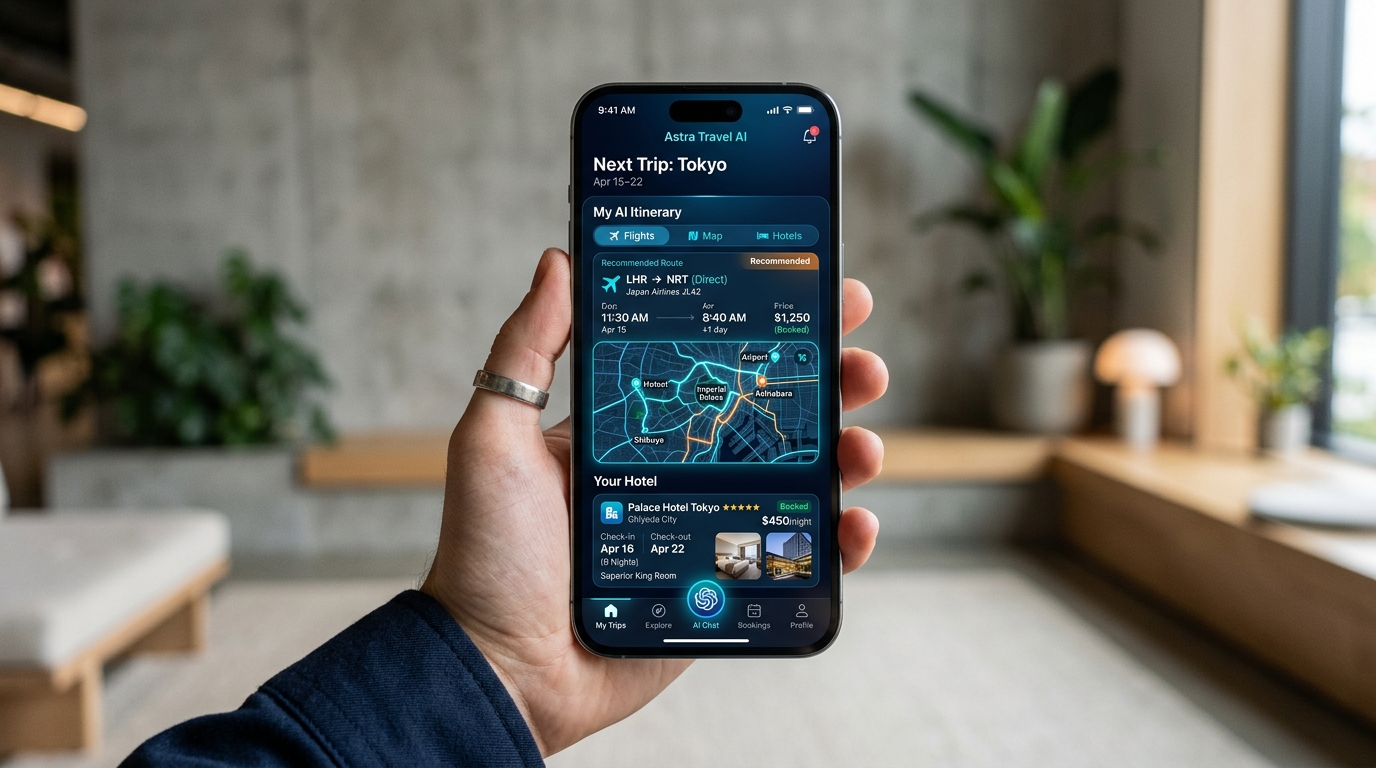
Modern smartphones ship with dedicated Neural Processing Units (NPUs). Mobile apps now run lightweight AI models locally for real-time camera processing, text summary, and predictive input without sending raw user data to the cloud.
- Privacy-First Inference: Processing biometric and personal data locally on device.
- Zero-Latency Responses: Instant AI feature execution independent of cellular connectivity.
- Reduced Cloud Costs: Offloading inference compute from cloud servers to client hardware.
3. Offline-first architecture & resilient data sync
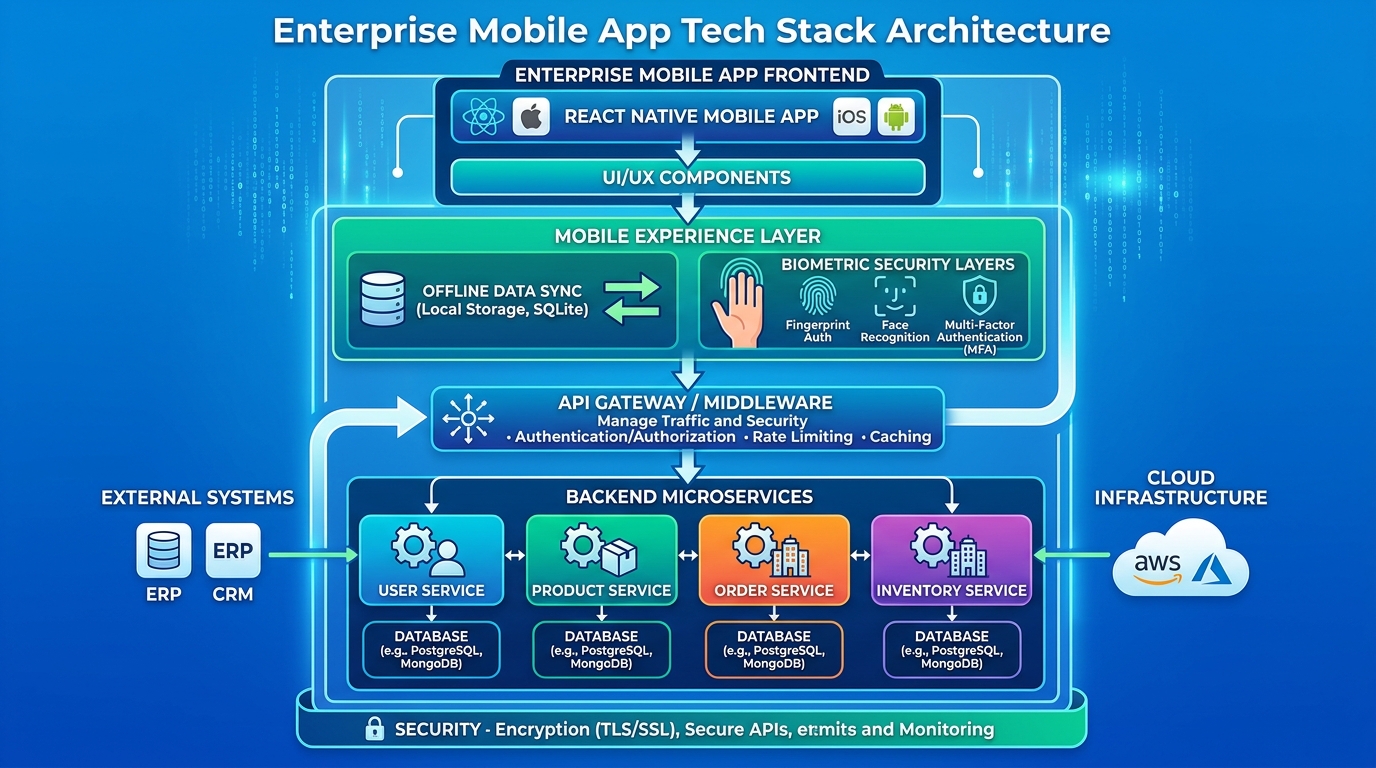
Unstable cellular networks should never crash an enterprise mobile app. Modern mobile architectures utilize local persistent storage (WatermelonDB or SQLite) with background delta synchronization.
- Optimistic UI Updates: Reflecting user actions immediately before server confirmation.
- Conflict Resolution: Server-side timestamps resolving concurrent data edits cleanly.
- Background Sync: Queuing pending API transactions to auto-submit when connectivity restores.
4. Biometric security & zero-trust authentication
With mobile devices acting as primary digital keys for enterprise workflows, securing local app storage and API communication is paramount.
- Biometric Hardware Integration: FaceID / TouchID hardware key authentication.
- TLS Certificate Pinning: Preventing man-in-the-middle API intercept attacks.
- Encrypted Storage: Securing local SQLite databases with AES-256 SQLCipher encryption.
5. Building enterprise mobile backend pipelines
A successful mobile application relies on robust backend microservices, API gateways, and automated CI/CD deployment pipelines (Fastlane & GitHub Actions).
- BFF (Backend-For-Frontend) Pattern: Tailoring API payloads specifically for mobile client consumption.
- Over-The-Air (OTA) Updates: Pushing instant JS bug fixes via Expo Updates without app store resubmissions.
Frequently Asked Questions
Is React Native or Flutter better for enterprise mobile apps in 2026?
How does offline-first architecture improve user retention?
What is Over-The-Air (OTA) code updating?
Related Blog

Ready to build without the runaround?
Start with a practical conversation. We will help you understand the right next step before you spend money building the wrong thing.
Start a Project