
Building Scalable Mobile & Cross-Platform Games: Tech Stack & Architecture
An engineering guide to multi-player game servers, real-time rendering, cross-platform engine selection, and cloud asset delivery.
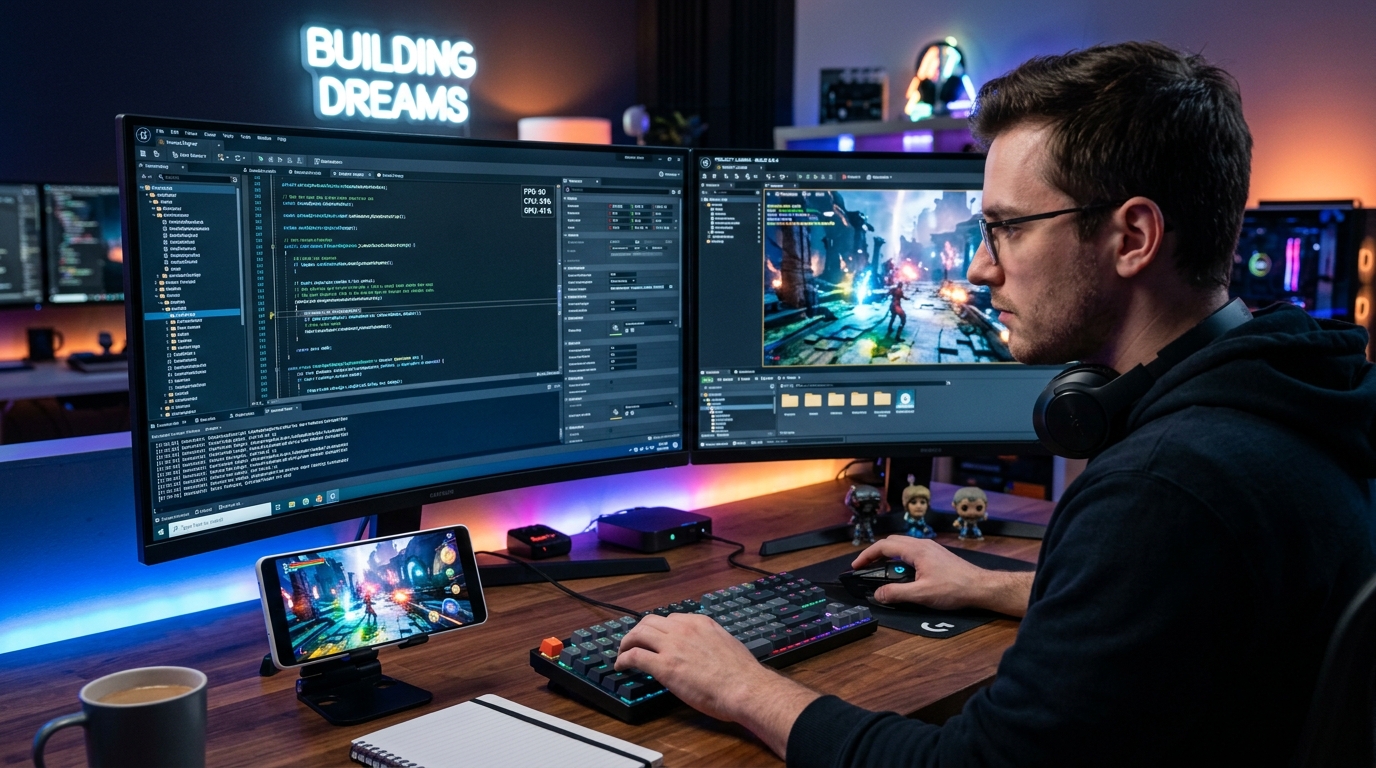
The mobile gaming market has evolved far beyond casual 2D puzzles. Today's players demand console-grade 3D graphics, seamless cross-platform multiplayer, and real-time social interaction on their mobile devices.
Engineering a high-performance game platform requires balancing battery efficiency, frame-rate consistency (60 FPS+), dynamic asset streaming, and low-latency authoritative server infrastructure.
key takeaways
- Choose Unity or Unreal Engine 5 based on target device specifications and graphical fidelity.
- Implement client-side prediction and server reconciliation for smooth multiplayer networking.
- Use level-of-detail (LOD) mesh optimization to maintain stable 60 FPS on mid-range devices.
- Decouple game assets using cloud CDNs to minimize initial app binary download size.
1. Cross-platform game engine selection
Selecting the right game engine dictates rendering performance, platform porting speed, and memory overhead across iOS, Android, PC, and web build targets.
Unity remains the industry leader for cross-platform mobile games due to its lightweight C# runtime, while Unreal Engine 5 excels in high-fidelity realistic environments using Nanite virtualized geometry.
- Unity: Ideal for 2D/3D mobile titles requiring fast iteration cycles and wide device compatibility.
- Unreal Engine 5: Best for AA/AAA graphical quality using C++ and Blueprint visual scripting.
- Godot: Lightweight open-source alternative for rapid prototyping and indie games.
2. Low-latency multiplayer networking
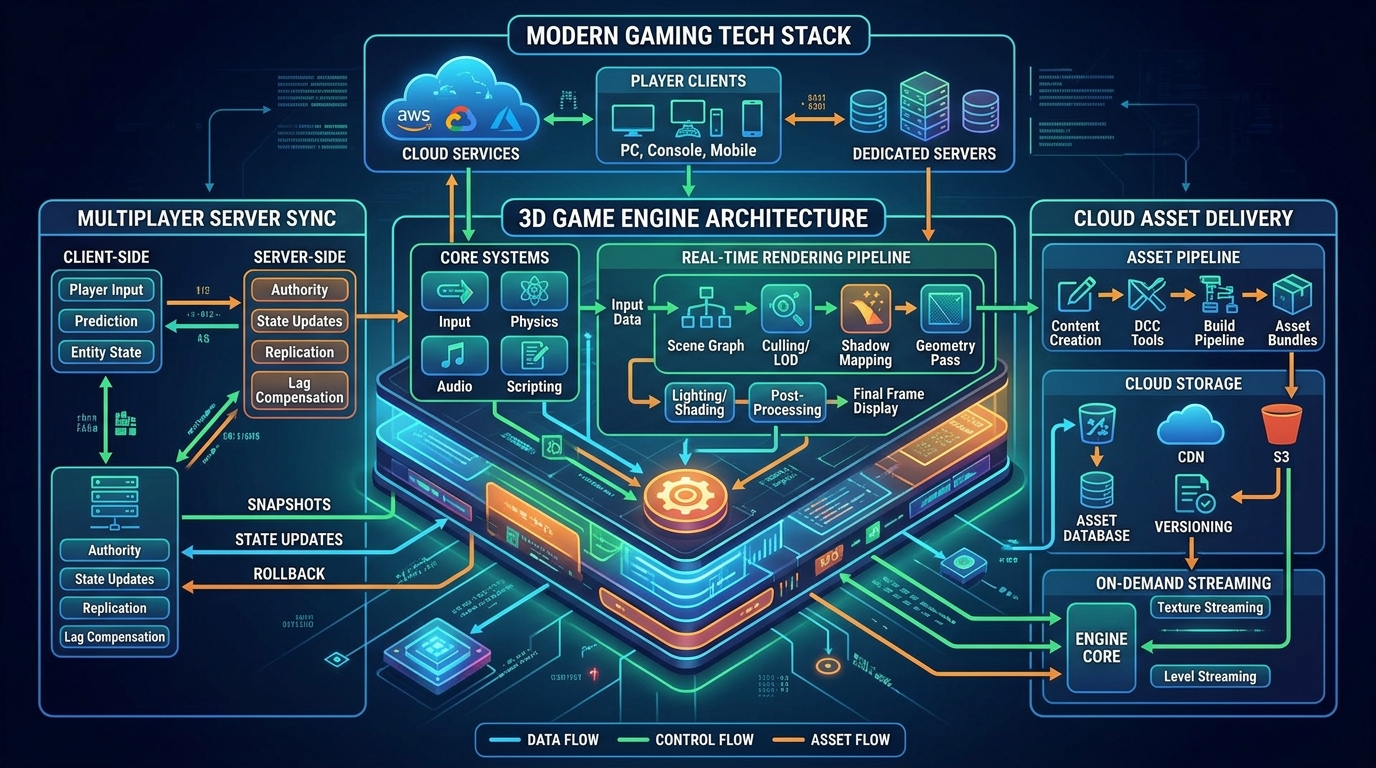
Multiplayer games require robust server architecture to synchronize player movements, combat actions, and game state updates without noticeable latency.
- Authoritative Servers: Prevents client-side cheating by validating all game actions on dedicated cloud nodes.
- Client Prediction & Reconciliation: Smoothes out latency by instantly predicting local player movement.
- UDP / WebSockets Protocols: Fast transport layer for real-time physics and state synchronization.
3. Real-time rendering & LOD optimization
Mobile GPUs operate under strict thermal and battery constraints. Maintaining high frame rates requires aggressive polygon reduction and shader optimizations.
- Dynamic LOD (Level of Detail): Swapping high-poly meshes with low-poly variants as objects recede from camera.
- Texture Compression (ASTC/ETC2): Reducing VRAM footprint while keeping crisp texture details.
- Occlusion Culling: Skipping draw calls for objects hidden behind walls or landscape geometry.
4. Cloud asset delivery & live operations
App store size caps (200MB - 2GB) mean initial builds must contain only essential starter assets, downloading high-res levels dynamically via cloud CDNs.
- Addressable Asset System: Dynamic cloud loading of 3D models, textures, and audio assets on demand.
- LiveOps Backend: Remotely updating seasonal events, battle passes, and special game modes without app updates.
5. Secure monetization & in-app purchases
Integrating Apple App Store and Google Play billing APIs with server-side receipt validation protects revenue against fraud and chargeback exploits.
- Server Receipt Validation: Verifying transaction signatures with store billing servers before granting virtual items.
- Analytics Pipeline: Tracking player retention, lifetime value (LTV), and daily active users (DAU).
Frequently Asked Questions
Which game engine is best for mobile game development in 2026?
How do you prevent cheating in online mobile games?
How long does it take to develop a 3D mobile game?
Related Blog


Ready to build without the runaround?
Start with a practical conversation. We will help you understand the right next step before you spend money building the wrong thing.
Start a Project